The Lake Anna Civic Association (LACA) has released its 2025 Water Quality Monitoring Program (WQMP) Annual Report, showcasing a year of rigorous scientific testing, technological advancement, and immense community dedication. Since its inception in 2002, the WQMP has evolved into a highly sophisticated operation, continuously monitoring the lake and its 218,500-acre watershed to ensure it remains safe for recreational use.
The 2025 program successfully executed four major initiatives: Legacy Water Quality Monitoring, Cyanobacteria Monitoring, Macroinvertebrate Monitoring, and the launch of a new Data Analysis Platform.
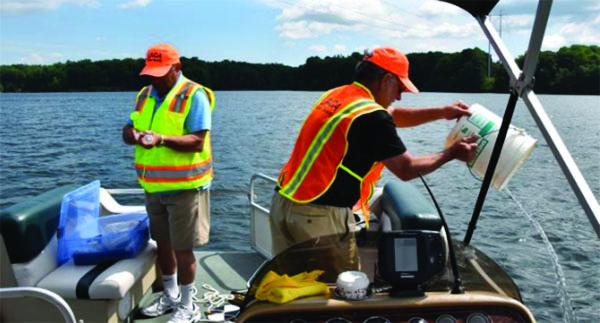
The backbone of the 2025 WQMP was the extraordinary effort of its volunteer force.
More than 60 volunteers contributed over 2,350 hours of labor to the program.
Based on the Independent Sector’s Value of Volunteer Time for Virginia ($34.42 per hour), this volunteer effort saved local counties and the state an estimated $80,900 in labor costs.
When factoring in the use of personal vehicles and boats, the total estimated savings exceeded $82,000.
LACA’s Legacy Water Quality Monitoring Project remains certified at the Virginia Department of Environmental Quality’s (DEQ) Level 3 category, meaning LACA’s data is of such high quality that the DEQ uses it for official regulatory efforts, such as listing or delisting impaired waterways.
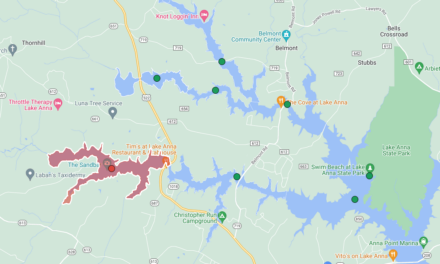
During the 2025 season, LACA volunteers consistently monitored 28 lake sampling sites and eight creek and stream sites within the watershed. Armed with sophisticated field instruments like the XYLEM/YSI ProDSS, volunteers tracked parameters including pH, dissolved oxygen, water clarity, nutrient levels, and E.coli. By the end of the year, LACA had successfully uploaded more than 3,500 crucial data points to the Virginia Data Explorer, a publicly available database used by DEQ and other state agencies to warehouse water quality data from citizen science organizations like LACA.
LACA also continued its aggressive monitoring and mitigation of cyanobacteria (which cause Harmful Algal Blooms, or HABs).
Water sampling at 12 dedicated stations, along with homeowner-requested testing, revealed that 2025 cyanobacteria levels remained consistent with previous years.
Through funds raised entirely by the “Kick the HAB” campaign, LACA deployed specialized ultrasound devices in the lower reservoir, including Hydro BioScience Quattro DB and WaterIQ Pulsar 4000+ units.
Results from the 2025 testing proved highly encouraging: the ultrasound technology effectively controlled cyanobacteria and green algae blooms when the water flow allowed for a minimum exposure time of 24 to 48 hours.
To assess the biological integrity of the watershed, LACA volunteers conducted “kick sampling” to count and identify benthic macroinvertebrates (such as stoneflies and mayfly nymphs). LACA executed this through two major partnerships:
In partnership with the Louisa County High School Envirothon Team, Lake Anna State Park, and local Master Naturalists, LACA monitored stations on the North Anna River and Pigeon Run.
LACA also collected data at Pigeon Run to help fill significant data gaps in the Chesapeake Bay watershed’s stream health assessments.
Perhaps the most significant structural upgrade in 2025 was the transition from static spreadsheets to a state-of-the-art relational database management system called WQDas (Water Quality Data Acquisition Solution).
To maintain strict DEQ auditing standards and a digital “chain of custody,” WQDas utilizes tablet-based logging and Digital Pen Entry Forms to virtually eliminate human transcription errors from the field. This cloud-based SQL platform allows LACA to perform complex, multi-disciplinary ecosystem modeling, turning raw data into actionable intelligence.
The public can now easily access this regulatory-grade data and view visualizations by visiting the new platform at https://laca.wqdas.com.
Looking ahead to 2026, LACA will continue its robust monitoring of the lake and watershed with only a few strategic changes to the 2025 plan. First, LACA is expanding its Waste Heat Treatment Facility (WHTF) monitoring plan by adding a new station in Sedges Creek, bringing the WHTF total to eight monitoring stations. This specific location was chosen because it is the proposed discharge site for the Amazon Data Services Lake Anna Technology Campus (LATC). By initiating data collection now, LACA will secure a year or more of critical historical baseline data to compare against future environmental and water quality conditions once the LATC discharges are permitted and begin.
Second, LACA is refining its cyanobacteria monitoring efforts by instituting quarterly sampling at five key locations in the upper reservoir. This targeted testing will track cyanobacteria and other microscopic plant and animal species in the water column, providing the essential data needed to assess the long-term effectiveness of the state-funded Phosphorus Remediation Program.
You can contact the LACA Water Quality Monitoring Program managers through email by contacting either Harry Looney at harry.looney@lakeananvirginia.org or Dick Hanscom at dick.hanscom@lakeannavirginia.org.