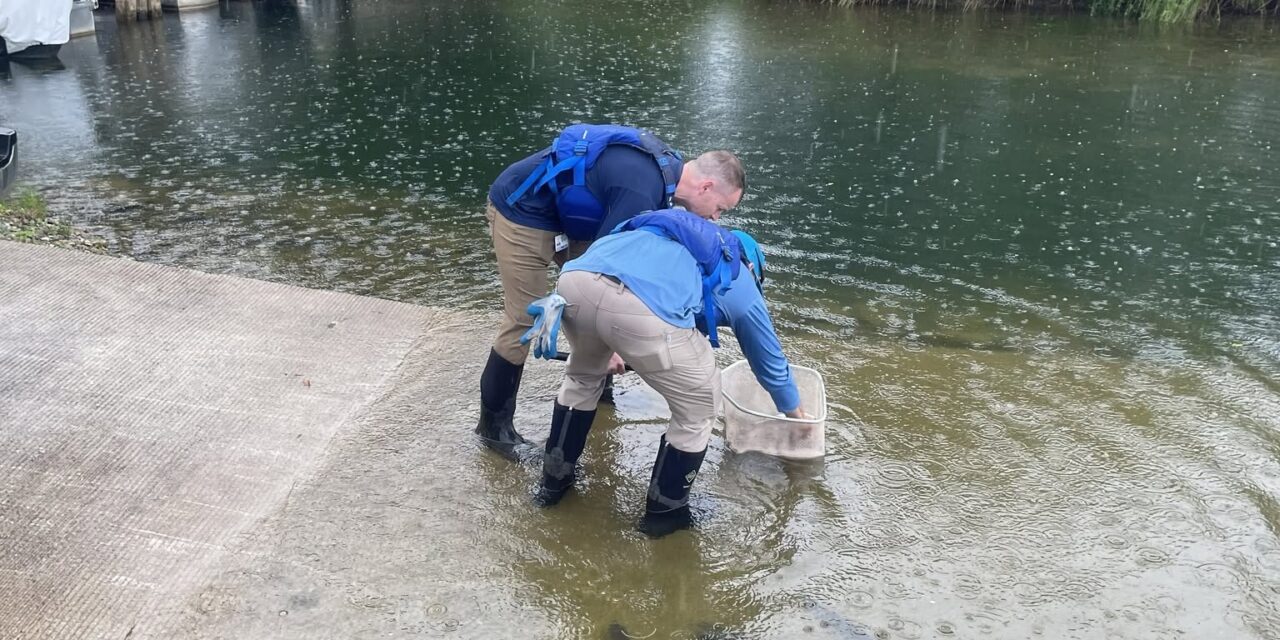
As summer gets started and more people head to the lake, the Lake Anna Advisory Committee is moving forward with its 2026 hydrilla treatment plan. After earlier planning and public input, the work is now shifting into the main summer treatment phase.
Hydrilla coverage has increased in the lake over the past three years. While the exact acreage is unknown, it is estimated that the main lake has approximately 175 acres and the Waste Heat Treament Facility has 180 acres.
While it is considered a nuisance by dock owners and boaters and an invasive aquatic plant, hydrilla also offers benefits to the Lake Anna ecosystem including acting as a nutrient and sediment sink, providing habitat for aquatic life and food for waterfowl.
Finding an acceptable balance between homeowner concerns, biological benefits and budget constraints is the challenge for lake managers.
A Two-Pronged Approach
To Mitigation
This year’s plan uses two tools to help manage hydrilla. In April, contractors placed sterile grass carp in three areas of the public side reservoir. This stocking was accomplished as a proactive replenishment of fish in areas treated over the past three years with sterile carp. These fish help by eating hydrilla over their 15-20 year lifespan.
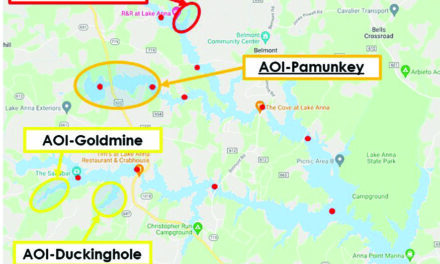
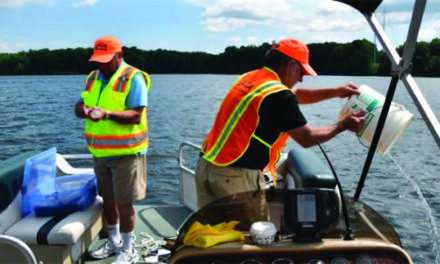
LAAC is also using survey data to decide where chemical treatments are needed. A June survey showed that hydrilla is actively growing, with plants reaching about 4 to 10 inches up from the lake bottom. Based on those results, treatments are planned for 16 areas on the public side of Lake Anna on July 13 and 14. The approved chemicals have been cleared by Dominion Energy and the appropriate state agencies.
The 16 treatment areas include one large area paid for by LAAC, two smaller areas supported through a public-private partnership, and 13 areas funded by private residents or homeowner/property owner associations. A full list of treatment areas is included in the 2026 Hydrilla Treatment Plan on the Louisa County website (https://www.louisacounty.gov/655/Lake-Anna-Advisory-Committee).
Important Change for the Private Side
There is also an important update for the private side of the lake, also called the Waste Heat Treatment Facility. Dominion Energy is now fully responsible for funding and managing hydrilla treatments there. Because of that change, homeowners and HOAs on the private side can no longer separately pay LAAC’s contractors for their own chemical treatments.
Dominion stocked five areas of the WHTF with 250 triploid grass carp in late May. Dominion is evaluating whether herbicide treatment will be necessary for 2026. The decision will be based on considerations of hydrilla growth levels, effectiveness of the triploid grass carp, water quality, environmental and regulatory guidance, and recreational access needs.
If herbicide treatments are necessary, Dominion Energy will work with an approved, licensed applicator to apply treatment in targeted areas around early August 2026, with greater details provided at least one week prior to treatment.
If residents on the private side see new or worsening hydrilla problems, they should report them to LAAC and to Dominion Energy’s environmental team so the areas can be reviewed and added to Dominion’s treatment schedule if needed.
State Funding Helps
Public-Side Work
For the public side of the lake, LAAC recently received help from the Virginia state budget. The budget includes $30,000 in both fiscal year 2027 and fiscal year 2028 to support hydrilla management and buoy maintenance. This extra funding gives LAAC more flexibility to treat important public areas without using up local reserve funds too quickly.
The Goal
The overall goal of the 2026 plan is to keep Lake Anna safe, easy to navigate, and healthy for everyone. As survey results are finalized, treatment work will continue in approved areas so the lake can remain a resource people can enjoy throughout the summer.
2026 Lake Anna Hydrilla Treatment Plan Enters Summer Phase
As water temperatures rise and the peak recreational season gets underway, the Lake Anna Advisory Committee (LAAC) is actively executing the 2026 Hydrilla Treatment Plan. Following its initial development and public comment period earlier this year, the plan is now in its critical summer survey and execution phase.
A Two-Pronged Approach to Mitigation
The 2026 strategy relies on a combined approach of biological and chemical controls. In April, LAAC contractors stocked sterile (triploid) grass carp in the upper branches of the lake to provide continuous, natural grazing pressure on the invasive Hydrilla verticillata.
Complementing the carp, LAAC is utilizing a data-driven approach for chemical spot-treatments. The June Hydrilla survey is complete and the data indicates that the Hydrilla growth season is well underway, with growth ranging from 4 to 10 inches from the sediment. Based on the June survey outcomes, Hydrilla mitigation treatments will be conducted in 16 different areas of the Lake Anna reservoir (“public side”) on July 13th and 14th utilizing chemicals approved by both Dominion Energy, the Department of Wildlife Resources, and the Virginia Department of Agriculture and Consumer Services. The treatment areas include one large area funded by the LAAC budget, two smaller areas in the upper reservoir demonstrating a public-private partnership funding approach, and thirteen areas of various acreage funded by private citizens or homeowner/property owner associations. Treatment areas are listed in the 2026 Hydrilla Treatment Plan. This document can be downloaded from the LAAC page of the Louisa County website (https://www.louisacounty.gov/655/Lake-Anna-Advisory-Committee).
Private-Side Hydrilla Management
A key update to keep in mind for the 2026 season is a change in how the Waste Heat Treatment Facility (WHTF), or the private side, will be managed. Under the updated Hydrilla Management Protocol, Dominion Energy assumed full responsibility for funding and managing hydrilla treatments on the private side of the lake. Consequently, the previous system that allowed homeowners or HOAs to privately fund chemical treatments through LAAC’s contractors has been phased out for properties in the WHTF. Residents observing new or expanding hydrilla infestations on the WHTF should report them to the LAAC and Dominion Energy’s environmental team for assessment and integration into Dominion’s master treatment schedule.
State Funding Boosts Public-Side Efforts
For the public side of the reservoir, LAAC’s efforts recently received a substantial boost from the Virginia state budget. A $30,000 allocation was secured in both fiscal year 2027 and 2028 specifically to support LAAC’s ongoing management of invasive hydrilla and its regulatory buoy maintenance program.
This state-level investment provides critical financial padding, ensuring LAAC has the capital necessary to treat high-priority public coves without prematurely draining local reserve funds.
The overarching goal of the 2026 Hydrilla treatment Plan is to keep Lake Anna safe, navigable, and ecologically balanced for everyone. As the committee finalizes the June survey data, targeted spot-treatments will soon begin in areas approved for chemical treatments. By working together, we can ensure the lake remains a vibrant, healthy resource for all of us to enjoy this summer.