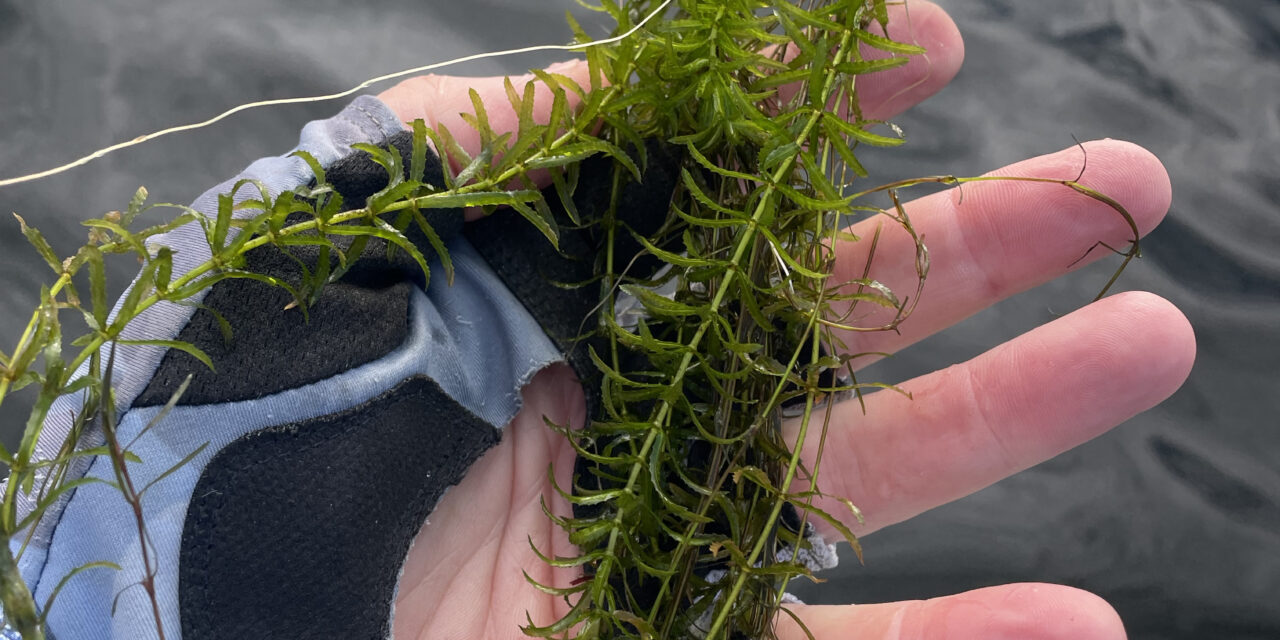
While some residents only think about hydrilla when they see it tangled in their boat propellers in the late summer, the Lake Anna Advisory Committee (LAAC) treats it as a 12-month campaign.
To ensure the lake remains navigable and ecologically balanced, LAAC follows a strict, three-phase Hydrilla Planning and Treatment Timeline. Here is an inside look at the year-round process required to keep the invasive weed in check.
Phase 1 of the annual hydrilla management process begins on October 1st of each year and continues through the end of January. The annual treatment plan for the upcoming recreational season is drawn up while the water is getting cold. The committee spends the months of October, November and December focused on the development of a draft treatment plan for the upcoming recreational season. The draft treatment plan that will be released for public review is reviewed by the Virginia Department of Wildlife Resources (DWR) and Dominion Energy prior to public release.
In January, the committee kicks off the new year with a formal public review period. Following the public’s input, the plan is presented for approval at the committee’s regularly scheduled meeting on the fourth Thursday of the month.
To maintain the integrity of the lake’s ecosystem, LAAC retains active oversight, continuously monitoring and tracking all privately funded hydrilla treatments conducted within the Lake Anna reservoir to ensure they align with broader water quality goals. All requests for private hydrilla treatments in the Lake Anna reservoir (aka public side) must be submitted by October 1st of each year to be considered for approval during the next recreational season. Send a request for an application to laac.hydrilla.reservoir@gmail.com.
Once the committee approves the annual treatment plan, the hydrilla management process enters Phase 2, which runs from February through April.
With the strategy finalized, the focus shifts to logistical execution: securing necessary permits, procuring contractors, and sourcing biological controls. If sterile grass carp are part of the integrated plan, we must first obtain a permit from the Virginia Department of Wildlife Resources (DWR). Concurrently, the Louisa County Procurement Office issues Invitations to Bid for carp stocking and herbicide application as needed by the integrated management plan. After reviewing the proposals, a contractor is officially selected and awarded the project. Finally, if biological controls are being utilized, the contractor will stock the sterile carp in mid-April, depending on ideal lake water temperatures.
As the water warms and hydrilla enters its rapid growth cycle, the annual management process shifts into Phase 3, running from May through September. During this active execution phase, LAAC conducts comprehensive hydrilla surveys each month across both the Lake Anna reservoir and Dominion’s Waste Heat Treatment Facility (WHTF).
Homeowners living on the WHTF (private side) can ensure their shoreline areas are included on the LAAC surveys by sending an e-mail to laac.hydrilla.whtf@gmail.com. The surveys deliver data that are critical for identifying early growth in vulnerable zones and documenting the broader state of aquatic vegetation lake-wide.
Guided by these survey results, targeted herbicide treatments are executed during the summer months, typically following the Fourth of July holiday. This specific timing ensures the hydrilla has reached a sufficient growth stage, allowing the systemic herbicide to achieve maximum biological effectiveness.
As the summer treatments wrap up and the calendar flips back to October, the LAAC team immediately begins drafting the integrated plan for the next year.
All requests must be submitted to the LAAC by October 1st. Meeting this deadline is essential to ensure your localized treatment can be seamlessly integrated into the broader, reservoir-wide strategy and formally approved for the year ahead.