Members of Dominion Energy, the Virginia Department of Wildlife Resources and the Lake Anna Advisory Committee have begun planning for hydrilla management in the coming year. On November 20, representatives of all three met to discuss options for managing the growth of the submerged aquatic plant in 2026.
Dominion’s representatives included Director- Nuclear Plant Support Ryan Bugas, Environmental Specialist Danny Bryant, Lake Management Representative Devan Payne and Manager- State & Local Affairs Sarah Marshall. DWR biologist Mike Isel and technician Robbie Willis also attended. LAAC’s representatives included chairman C.C. McCotter and Water Quality Subcommittee Chair Harry Looney.
At the meeting Bugas stressed a collaborative effort to manage and mitigate hydrilla growth on both the Waste Heat Treatment Facility (WHTF) Cooling Ponds and the main reservoir between Dominion, LAAC and DWR.
“We are 100% thinking about environmental safety not just recreational issues. I’ve challenged our people to do this in an environmentally sound manner with a balanced approach to mitigation,” Bugas said.
Bugas suggested an approach for 2026 that resembled LAAC’s existing hydrilla management protocol using an accurate annual hydrilla coverage survey which would produce an informative result and a bounded response.
That response in the past has been an annual survey that notes areas of hydrilla growth in areas that impede navigation and then the use of approved aquatic herbicides combined with the stocking of grass eating carp arranged by LAAC and conducted by contractors.
In 2025 LAAC organized the stocking of 100 grass carp into the upper North Anna flats and treated approximately 50 non-contiguous acres of hydrilla elsewhere (Plentiful Creek, Rockland Creek and along the shoreline in front of Bear Castle and Tara Woods subdivisions) using $23K of funds provided by Louisa, Orange and Spotsylvania Counties that included reserve funds held back for just such an occasion.
There were also two privately funded hydrilla treatments approved by LAAC and Dominion; one by the Freshwater Estates homeowners’ association in Freshwater Creek and one by BJ Blount in front of a rental property he owned.
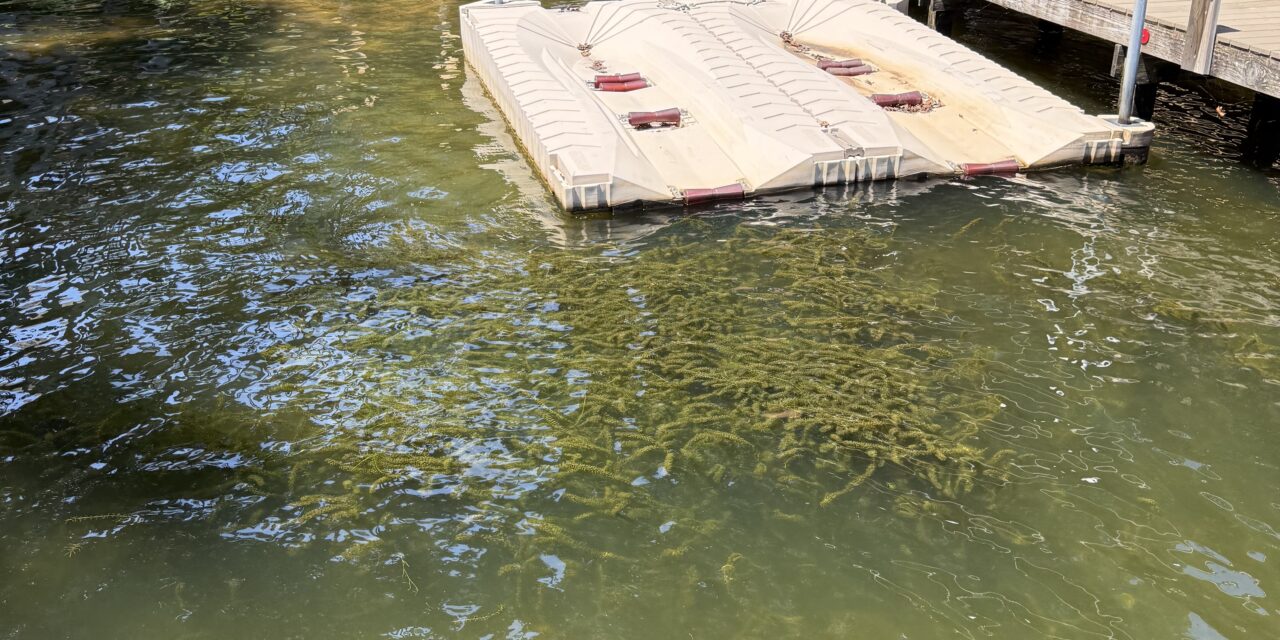
One of the issues that arose this season was expanding growth of hydrilla on the WHTF – the private side of the lake owned by Dominion – as homeowners there were looking for answers to weed growth issues.
During the meeting Dominion noted their preference to have LAAC make recommendations to them for all parts of the lake but noted the company would, to a point, fund hydrilla mitigation efforts on the WHTF in 2026, including potential herbicide applications and the stocking of triploid grass carp. DWR representatives stressed the need for restraint when using grass eating carp as a management tool for hydrilla.
“We try to support an integrated approach with spot treatment with chemicals and augmentation with carp. We want to keep a balance,” Isel told those at the meeting.
McCotter and Looney both noted the annual survey was an ambitious task for LAAC volunteers to undertake and that they were already working to expand the numbers on the Water Quality Subcommittee. McCotter noted that perhaps aerial drone surveys might save volunteer capital.
It was also discussed and agreed that herbicidal hydrilla management efforts should be commenced earlier than August and September to get more value and lasting effect. July would be the new target date for treatment pending the final recommendation of LAAC surveys.
Looney asked the final hydrilla management plan include a single point of contact for members of the public to communicate concerns with hydrilla.
The group agreed to meet again prior to LAAC’s annual hydrilla protocol review meeting in January 2026.
“With these efforts we’d like to manage hydrilla growth as a team to reduce the navigational impact of it,” Bugas noted.