The Lake Anna Advisory Committee (LAAC) approved an updated, data-driven hydrilla management plan for 2026 to manage the stubborn, aquatic weed. Instead of just reacting to the worst weed patches each month, the committee is now looking at the big picture, using environmental data to figure out which treatments work best for the whole lake over the long term.
While hydrilla can be a major nuisance, the goal isn’t to wipe it out completely. Believe it or not, leaving a controlled amount of hydrilla in the lake actually helps the ecosystem. The plants act as natural water filters by absorbing excess nutrients like phosphorus. By soaking up these nutrients, hydrilla helps starve out the dangerous cyanobacteria that cause Harmful Algal Blooms (HABs). The LAAC plan aims for a balance: keeping the weed thin enough for safe boating and swimming, but leaving enough to protect the lake’s water quality.
LAAC has treated Lake Anna for Hydrilla verticillata every year since 2015, using a combination of sterile grass carp and approved herbicides. The committee’s Environmental and Water Quality Subcommittee is responsible for managing the Hydrilla Protocol and developing each year’s treatment plan, and the 2026 plan was drafted in line with the Hydrilla Protocol that lays out the annual process that is executed to determine which treatments will be used and what areas are approved for treatments.
The draft 2026 Hydrilla Treatment Plan and an updated Hydrilla Protocol were released for public review in January, with a comment period running through January 21. The full committee then formally acted at its January 22nd meeting, voting unanimously to approve the updated Hydrilla Protocol and the 2026 Hydrilla Treatment Plan.
To achieve a balance, the 2026 program relied on two main tools:
•Biological Control (Sterile Grass Carp): In April, LAAC contractors stocked sterile (triploid) grass carp into the upper branches of the lake. Grass carp are fish that act like underwater lawnmowers, constantly grazing on aquatic weeds. Because they are “triploid,” they are bred to be completely sterile, meaning they cannot reproduce and take over the lake.
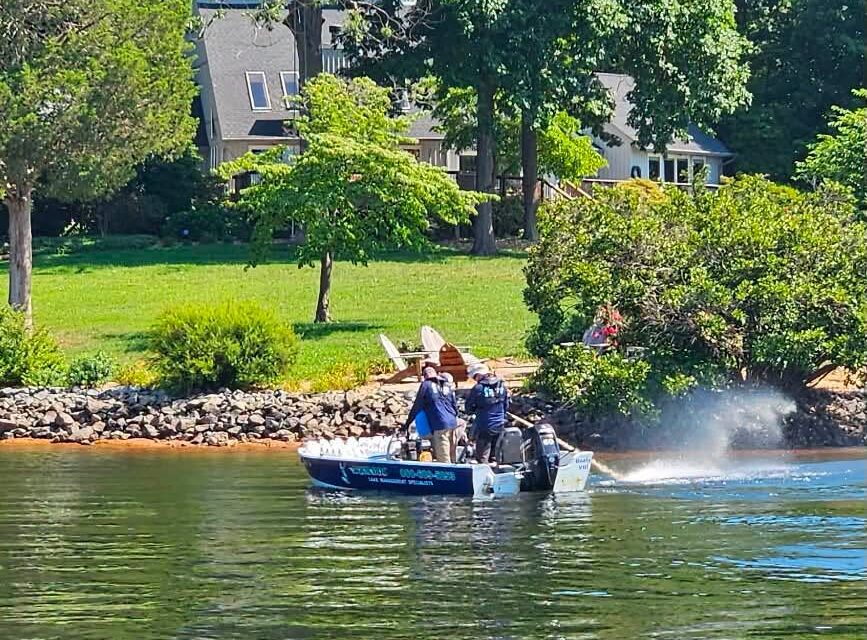
•Targeted Herbicides: In addition to the fish, the committee scheduled targeted chemical treatments for mid-July across 16 specific areas on the public side of the lake. These treatments were carefully reviewed and approved by state wildlife and agriculture departments, as well as Dominion Energy.
A major change this year is happening on the private side of the lake, also known as the Waste Heat Treatment Facility (WHTF). Dominion Energy has stepped up to take full responsibility for funding and managing hydrilla treatments in this area. In late May, Dominion released 250 sterile grass carp into five areas of the WHTF and is evaluating if any herbicide treatments will be needed later in the year. Because of this change, homeowners and HOAs on the private side will no longer need to pay LAAC contractors for their own chemical treatments.
Managing an invasive species isn’t cheap, and the 2026 LAAC treatment plan cost approximately $30,000. Fortunately, the recently signed state budget provides a significant boost, allocating $30,000 for both fiscal years 2027 and 2028. These state funds will be used to support future hydrilla management plans and help maintain the lake’s navigation and hazard buoys.
By tracking data year after year, LAAC hopes to discover the perfect combination of hungry carp and targeted chemicals to keep hydrilla in check, ensuring Lake Anna remains clean, safe, and beautiful for everyone.
Residents can find the full 2026 Hydrilla Treatment Plan, including a complete list of the approved treatment areas, and the Hydrilla Protocol on the Lake Anna Advisory Committee page of the Louisa County website.